The six steps, one line each
- People and powerLeave rooms where water touches outlets or cords; main power off only from a dry spot
- Gas and sewageA gas smell means leaving first; keep skin out of sewage
- The sourceClose the valve at the fixture, the house or the meter, from dry ground
- PhotographsTake them before temporary repairs, and keep every receipt
- What to discardPorous items touched by floodwater; ask about water from a supply line
- Air and dryingFans blowing outward, a dehumidifier, and no flooded heating or cooling system
Step one: people, then power
Get everyone out of any room where water is touching outlets, cords or appliances. The CDC's guidance for flooded homes says to shut off the main power only from a dry location, and otherwise to call an electrician. The same page warns against switching power on or off, or running electric tools, while standing in water.
Keep children out of the wet area as well. The CDC's floodwater page also wants children kept away from flooded areas and hands washed after any contact. An electrician checks the wiring before power goes back on.
Step two: gas, sewage and strange smells
A gas smell means leaving first. The CDC says to open windows on the way out if that is possible, avoid sparks, and tell the gas company, the fire department or the police from outside; 911 reaches the fire department. Suwanee's utilities page lists Atlanta Gas Light at 404-584-4000, and Sugar Hill runs its own gas line at (770) 271-2137.
Water with a sewage smell, or water that rose through a drain, is a different hazard. The EPA says sewage carries bacteria, viruses and parasites, and sewage backup cleanup covers what that changes.
Step three: stop the water at its source
Start with the valve at the fixture or where the line enters the house, and work from dry ground. Gwinnett County's freezing-weather page describes the valve at the meter: it turns clockwise with a tool such as pliers, and the house has no water until it is opened again.
If the source is not obvious, Gwinnett's leak page offers a two-hour test: stop everything that uses water, leave the shutoffs alone, and see whether the meter still moves. The freezing-weather page adds that a cracked pipe can release hundreds of gallons a day.
Step four: photographs first, then the insurance call
Georgia's insurance commissioner says to know your policy, photograph damage before temporary repairs, keep receipts and hold off on permanent repairs until the insurer has inspected. It also notes that a policy may require notice within a set time, which makes reading the policy early worthwhile.
The state's emergency management agency adds that the usual homeowners policy leaves out flood damage. Neither page says whether a particular loss is covered. That answer sits with the policy and the insurer.
Step five: what to lift, toss and leave alone
From the CDC: porous items that floodwater soaked, such as cloth, rugs, wall coverings and drywall, are thrown out, and so is any food that touched the water. Those lines are written for floodwater, so ask the contractor how they apply to water from a supply line.
University of Georgia Extension says carpet dried within 48 hours avoids mold and moldy padding is always discarded. It also says anything non-structural that cannot be dried within 48 hours is thrown out.
Step six: air, fans and a dry house
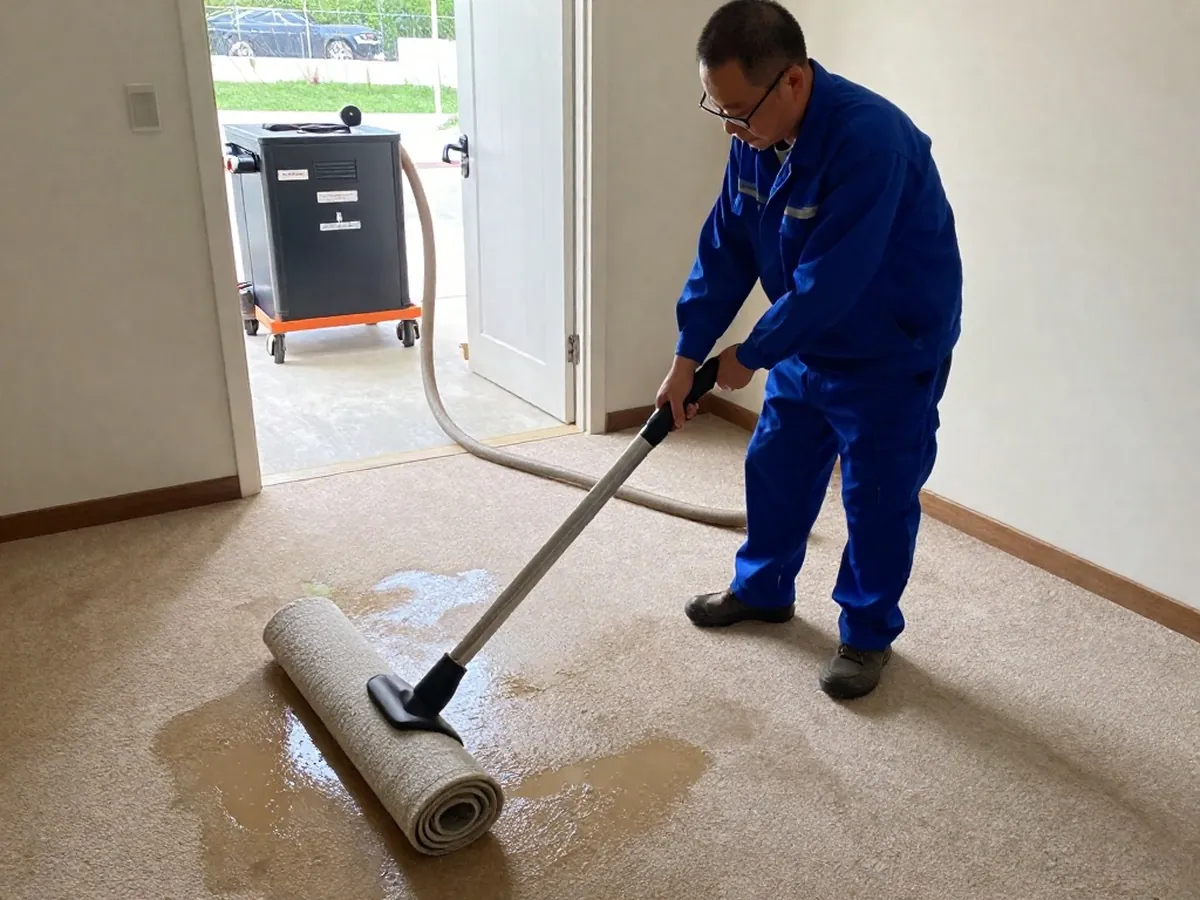
The CDC suggests fans that blow air outward and dehumidifiers, and says not to run a heating and cooling system that has been flooded. A wet-dry vacuum or pump comes out only after an electrician has confirmed the power is safe.
University of Georgia Extension says large fans plus dehumidifiers speed drying, with air conditioning and heat run together when no dehumidifier is on hand. To prevent mold, the EPA's brief guide wants water-damaged areas dried out within 24 to 48 hours. How drying equipment works explains the machines.
When does a phone call make sense?
When the power is safe, the source is stopped and the floor, wall or ceiling is still wet, the job is water extraction and drying, or burst pipe water damage if a line let go.
Call (678) 572-1407 with the wet room, the steps already taken and the street address ready. The contractor can arrange a visit.
Where this comes from
- CDC, Reentering your flooded home
- CDC, Floodwater after a disaster or emergency
- U.S. EPA, Sanitary sewer overflows: frequent questions
- U.S. EPA, A brief guide to mold, moisture and your home
- U.S. EPA, Flood cleanup: protect indoor air and your health
- U.S. EPA, Flooded homes: doing it yourself
- University of Georgia Extension, Removing mold in your home (C1047-2)
- Gwinnett County Water Resources, Freezing weather
- Gwinnett County Water Resources, Leak detection
- Georgia Office of Commissioner of Insurance and Safety Fire, Insurance claim tips
- Georgia Emergency Management and Homeland Security Agency, Insurance planning
- City of Suwanee, Utilities
- City of Sugar Hill, Gas utility
Checked 1 Nov 2026