Five words you will hear on the phone
- Air mover
- A fan that pushes air along a wet floor or wall
- Dehumidifier
- A machine that pulls moisture out of the air
- Extractor
- A wand or pump that lifts standing water
- Moisture meter
- A handheld tool that reads how wet a material is
- Relative humidity
- How much moisture the air holds compared with its limit, as a percent
What a drying setup is trying to do
Drying is a two-step move: get water out of materials, then get it out of the air so it does not settle back in. The EPA's brief guide puts a 24 to 48 hour window on drying water-damaged areas and items to prevent mold. University of Georgia Extension says large fans plus dehumidifiers speed drying and cut the risk of mold.
A moisture meter reads the walls and floors, so the equipment goes where the readings point instead of where the wet-looking spots are.
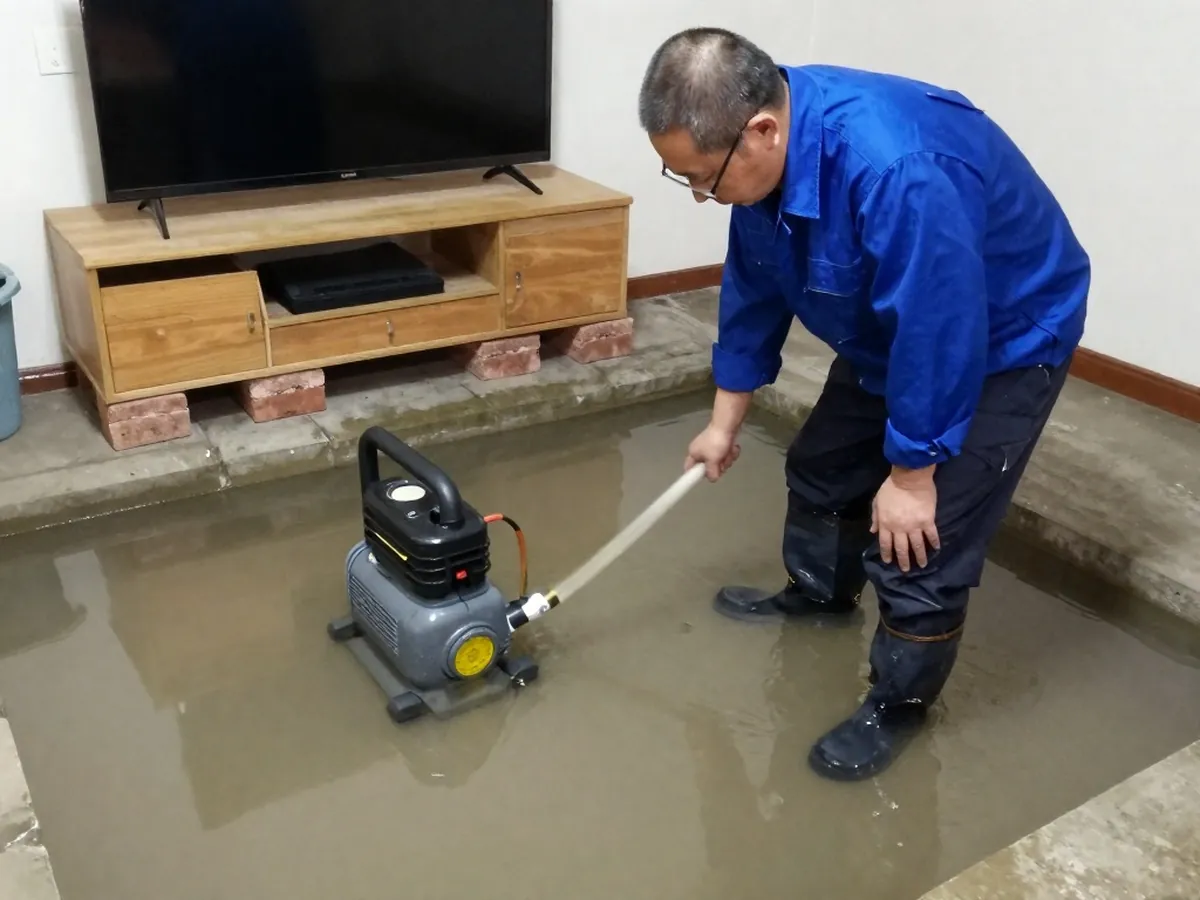
Pumps and extractors take the liquid first
Standing water goes first, by pump or wand. The Red Cross suggests emptying a flooded basement in stages, roughly a third of the water each day, so pressure from wet soil does not push the walls in. The CDC says a wet-dry vacuum or pump waits until an electrician has judged the power safe.
Carpet can be extracted in place or lifted when carpet and pad cannot be dried, a call that University of Georgia Extension frames with its 48 hour line.
Fans move air across the wet surface
An air mover is a fan that pushes air along a wet floor or wall to carry moisture off it. The CDC's flooded-home advice describes fans blowing air outward, and University of Georgia Extension pairs fans with dehumidifiers.
A single box fan in a closed room moves damp air in a circle. Pulling air out through a window or door gives the moisture somewhere to go.
Dehumidifiers pull water back out of the air
The EPA suggests indoor humidity below 60 percent, ideally 30 to 50, and says a humidity meter from a hardware store measures it. University of Georgia Extension's checklist says to consider a dehumidifier above 50 percent, and its mold guide says to run air conditioning and heaters together when no dehumidifier is on hand.
The machine's drip pan needs emptying; the university's checklist reminds owners to empty and clean it regularly.
Which materials dry in place and which come out
University of Georgia Extension says carpet dried within 48 hours avoids mold, moldy padding is always discarded, and wet fibrous insulation inside walls is removed. NDSU Extension says wallboard acts like a sponge and that flood-damaged walls call for several weeks of drying, and Mississippi State University Extension says to allow four to six weeks.
Those last two pages are written for flood damage in North Dakota and Mississippi, and no page checked gives a Georgia timeline. Meter readings on the actual wall tell more than a calendar.
Power and fuel for the machines
Electric equipment and standing water are a bad pair. The CDC warns against switching power on or off, or using electric tools, while standing in water, and wants an electrician to check the system before power returns. Gasoline engines, generators and pumps included, stay outdoors and at least 20 feet from a door, window or vent.
The same page says not to run a flooded heating and cooling system. A borrowed fan on a long cord across a wet floor breaks two of those rules at once.
When does the equipment call for a professional?
Deep water, wet walls, sewage and any question about power are the cases where a contractor's meter and equipment earn the call: see flooded basement and crawl space for deep water and mold after water damage for spotting that has already started.
Call (678) 572-1407 and describe what is wet and for how long. The contractor can arrange a visit.
Where this comes from
- CDC, Reentering your flooded home
- CDC, Floodwater after a disaster or emergency
- U.S. EPA, A brief guide to mold, moisture and your home
- U.S. EPA, Flood cleanup: protect indoor air and your health
- U.S. EPA, Flooded homes: doing it yourself
- U.S. EPA, What are the main ways to control moisture in your home
- U.S. EPA, Mold cleanup in your home
- University of Georgia Extension, Removing mold in your home (C1047-2)
- University of Georgia Extension, Mold and moisture home inspection checklist (C1083)
- NDSU Extension, Cleaning and repairing flood-damaged walls, ceilings and floors
- Mississippi State University Extension, Disaster relief: home cleanup and renovation for walls
- American Red Cross, 20 Red Cross safety steps for returning home after the flood
Checked 1 Nov 2026