Basements, crawl spaces and low rooms near Suwanee
Flooded Basements and Crawl Spaces in Suwanee, GA
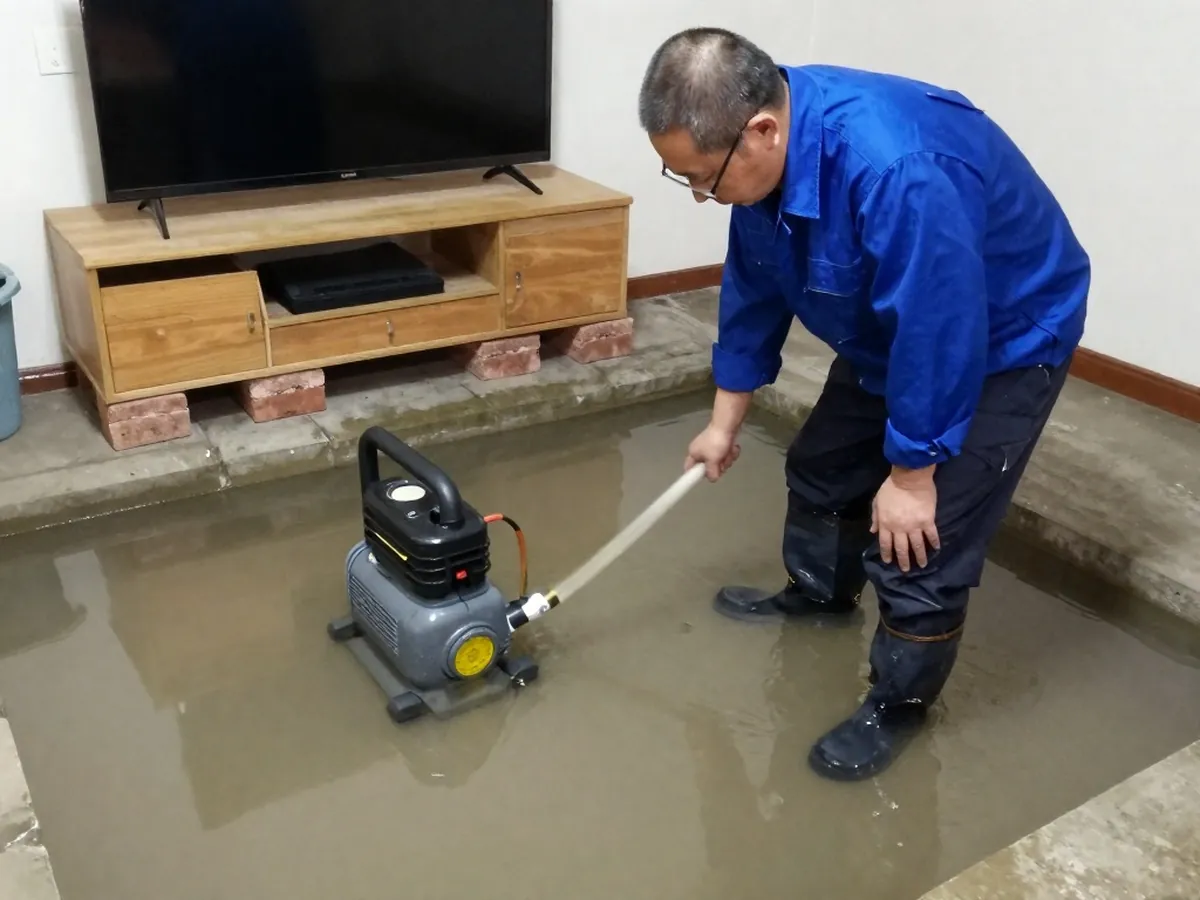
A flooded basement or crawl space in Suwanee, GA can follow a long rain, a failed sump pump or a line that let go.
Call (678) 572-1407 and say how deep the water is, whether a pump is running and whether anything electrical sits in it.
What you can see
- Water over the floor of a basement, a walkout level or a finished lower room
- A sump pit full to the lip, or a pump gone silent in a storm
- Damp patches climbing a foundation wall after a long rain
- A crawl space that smells of wet earth, with dripping insulation or a sagging ground sheet
- Carpet or stored boxes at the bottom of the stairs wet through
Around Suwanee
In September 2009, the Suwanee Creek gauge stayed above its 8-foot flood stage from 7:33 a.m. on the 21st to 4:16 p.m. on the 22nd and crested at 14.30 feet, per the National Weather Service's summary of the event.
Gwinnett County Water Resources takes reports of major flooding during rain, overflowing manholes and broken storm drains at 678.376.7000. Its page says private-side leaks and backups belong to the owner.
On site, a visit goes like this
Call (678) 572-1407 and say how deep the water is and whether a pump is running; the contractor can arrange a visit.
Before a pump starts, the power in the area is made safe, and the contractor notes how deep the water stands and where it came in.
Water comes out in stages. The Red Cross advises pumping about a third of it per day so the pressure of wet soil does not push a wall in.
Wet carpet, pad and lower drywall are checked, and porous items that held the water are listed one by one.
In a crawl space, the insulation, the ground sheet and the joists above get a look for damp.
Fans and dehumidifiers go in when the pumping is done, and the contractor writes down the findings for you and for the insurer.
When safety comes before cleanup
- Water over the outlets, the furnace or the breaker panel in the basement: do not go in. Stay upstairs, and dial 911 if someone is in danger.
- A gas furnace or water heater standing in water, or any gas smell: climb out of the basement and leave the house, then make the gas company or 911 your first call.
- A gasoline pump or generator: keep it out in the open air, 20 feet or more away from every window, door and vent, and out of the basement and garage.
- A basement wall that bows, cracks open or leaks in a stream: leave that room, and dial 911 if the wall gives way.
What changes the size of a job
Depth, duration and what stood in the water
How deep the water got and how long it stayed carry the most weight. A shallow film on bare concrete is a smaller job than a finished room with carpet, drywall and a furnace closet. A crawl space adds the cost of working in a tight space, and a source that keeps coming back, from a pump or a drain, adds to the plan. The contractor puts a figure on it after seeing the space.
Looks you can take from dry ground
Stay with checks you can make from dry ground, in daylight, away from anything electrical that has been wet. Wet wiring and soaked drywall are professional work.
- From the top of the stairs with a flashlight, note how deep the water is and whether it is rising, holding or dropping. Do not go down if it reaches outlets.
- Look at the sump pump from dry ground: is the float up, is the discharge pipe outside running? Leave the cord alone.
- Walk the outside of the house and look at the gutters and downspouts. A downspout that empties beside the foundation sends its water to the lowest room.
- Photograph the water line on the wall with a pencil in frame for scale before anything is hauled out.
Moves that make it worse
Moves that turn a wet basement into a collapsed one
Pumping the whole space out in one go, which the Red Cross warns can let wet soil push the walls inward. Going down the stairs to start a pump while the power is still on. Running a gasoline pump or generator in the garage with the door cracked. Digging a trench outside without calling 811, the Georgia utility locating line.
Georgia seasons and this job
July is the wettest month on the Buford gauge
The 1991-2020 normals from NOAA's Buford 2.8 SSE gauge, a few miles east of Suwanee, give 6.19 inches for July and about 58 inches across a year. A basement is most exposed when a wet June is followed by a stalled thunderstorm, because soil already full of water has nowhere to send more.
Have this at hand
What helps when you phone in
- How deep the water is, and whether it is rising or falling
- Whether a sump pump is running
- What is down there: furnace, water heater, panel, finished rooms
- Where the water seems to be coming in
- Photos of the water line, taken from the stairs
Have the street address, the room it started in and what you can see ready, then call (678) 572-1407. If you rent, contact the landlord first. Calls cover Suwanee, Sugar Hill and Johns Creek.
Before you hire anyone
Rebuilding a finished basement
Suwanee's building page names basement finishes among the work that needs a permit, which comes into play after the drying. The hiring checklist lists the building office in each of the three cities.
Where this comes from
- American Red Cross, 20 Red Cross safety steps for returning home after the flood
- CDC, Reentering your flooded home
- U.S. EPA, Flood cleanup: protect indoor air and your health
- U.S. EPA, Flooded homes: doing it yourself
- National Weather Service Peachtree City, The epic floods of September 2009
- National Weather Service Peachtree City, Flooding
- Gwinnett County Water Resources, How to report a problem
- University of Georgia Extension, Mold and moisture home inspection checklist (C1083)
Checked 1 Nov 2026